 LossGuardian
Trading psychology
How to be a disciplined trader: habits that actually stick
Trading discipline is not a personality trait. It is a small set of habits built one day at a time. Here is how to build them, and how to know they are working.
Ask any profitable trader what made the difference and you will almost never hear "a better indicator".
You will hear some version of: "I started following my own rules."
Discipline is the thing everyone agrees matters and nobody explains well. Most advice treats it like a personality trait. Either you have it or you do not.
That is wrong. Discipline is a set of habits. And habits can be built, by anyone, one day at a time.
What discipline actually looks like
Forget the idea of a calm, emotionless trading robot. A disciplined trader feels everything you feel. They just do a few simple things, every day:
- They take only the setups in their plan.
- They use their normal size, win or lose.
- They stop at their daily loss limit. No exceptions, no "one more".
- They wait after a loss before trading again.
- They stop at their cutoff time.
- They review their trades every week.
That is it. Nothing on this list needs talent. It needs repetition.
Step 1: Write rules you can actually keep
A lot of traders set rules that sound strict and break them on day one. "Only one trade a day." "Never lose more than ₹500." Then they break them, feel bad, and give up on rules altogether.
Start with rules that are a little better than what you do now, not perfect:
- If you usually take 12 trades a day, set a limit of 8. Not 2.
- If your worst days lose ₹15,000, set a daily limit of ₹8,000. Not ₹1,000.
A rule you keep is worth far more than a perfect rule you break. You can tighten it every few weeks. The loss limit calculator helps you pick a sensible daily number from your capital.
Step 2: Put the rules outside your head
Rules in your head get rewritten when you are stressed. Rules outside your head do not.
- Write them down and keep them next to your screen.
- Say them out loud before the market opens. It sounds silly. It works.
- Use tools that remind you at the moment you break one.
That last point is the big one. The moment you break a rule is exactly the moment you are least likely to notice. A well-timed reminder changes everything.
Step 3: Make breaking a rule visible
Here is a simple truth about habits: what gets noticed gets changed.
If you break your trade limit and nothing happens, it barely registers. If a clear alert shows you "14 trades, limit 10", you feel it. And the next day, you remember it.
This is how LossGuardian works. It watches your trades on your broker and alerts you when you cross a line you set: your daily loss limit, your trade limit, a losing streak, a quick re-entry after a loss, or your cutoff time. It never places or closes an order. It is read-only on purpose. The choice to stop is always yours, because that choice is the habit you are building. We explain this in how trading alerts help you catch your mistakes.
Step 4: Measure it
You cannot improve what you do not measure. And P&L is a bad measure of discipline, because you can break every rule and still finish green on a lucky day.
So measure the rules themselves. Every session, how many times did you break each one?
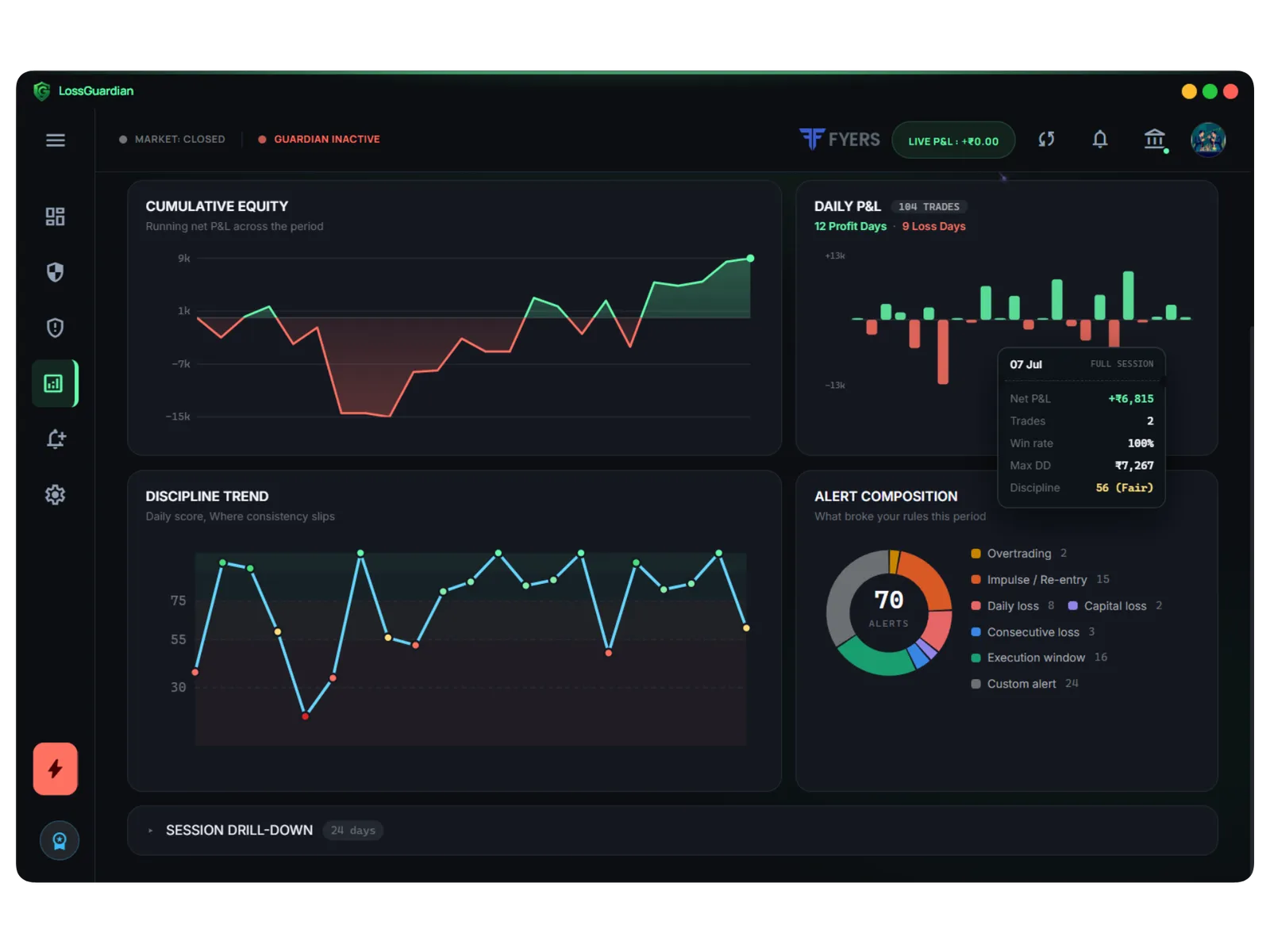
LossGuardian turns this into a discipline score from 0 to 100. Every session starts at 100 and points come off for each rule you break. You see exactly which rule cost what, and a trend line shows whether you are getting better.
Watching that line climb over a few weeks is one of the most motivating things in trading. Read more about the discipline score.
Step 5: Fix one thing at a time
Every week, look at your data and find the one rule you broke most often. Only that one. Next week, focus on it. Tighten the alert for it, or add a personal reminder.
One habit a week feels slow. But in three months that is twelve habits. That is a different trader.
Step 6: Expect slips, and keep going
You will break your rules sometimes. Everyone does. A bad day does not mean you failed at discipline. It means you are human.
What matters is the trend. Are your rule breaks getting less frequent? Are your bad days getting smaller? If yes, it is working, even if some days still go wrong.
Discipline is a gift to your future self
Every time you stop at your limit, you are protecting the trader you will be next month. Every time you skip a trade that is not in your plan, you are building a habit that will pay you for years.
It does not feel dramatic. It feels boring. That is how you know it is working.
When you are ready for the bigger picture, read how to become a profitable trader.
Questions traders ask
What does trading discipline mean?
Doing what your plan says, every day, including on the days you do not feel like it. Taking only your setups, using your normal size, respecting your loss limit and stopping when you said you would.
Why do I lack discipline in trading?
Usually because your rules live only in your head and nothing reminds you of them in the moment. Discipline is much easier when the rules are written down and something outside you checks them.
How long does it take to build trading discipline?
Most habits take weeks to months of repetition. Expect a few months of steady practice before your rules feel natural, with slips along the way. Tracking your progress weekly helps a lot.
How can I measure my trading discipline?
Count how often you break each of your rules per session. A discipline score turns those counts into one number, so you can see week by week whether you are improving.
LossGuardian watches your positions across six Indian brokers and warns you the moment you cross your own daily loss limit. It is read-only: it never places, modifies or cancels an order.
Join the waitlist