
Revenge trading detection
Revenge trading, caught by the clock
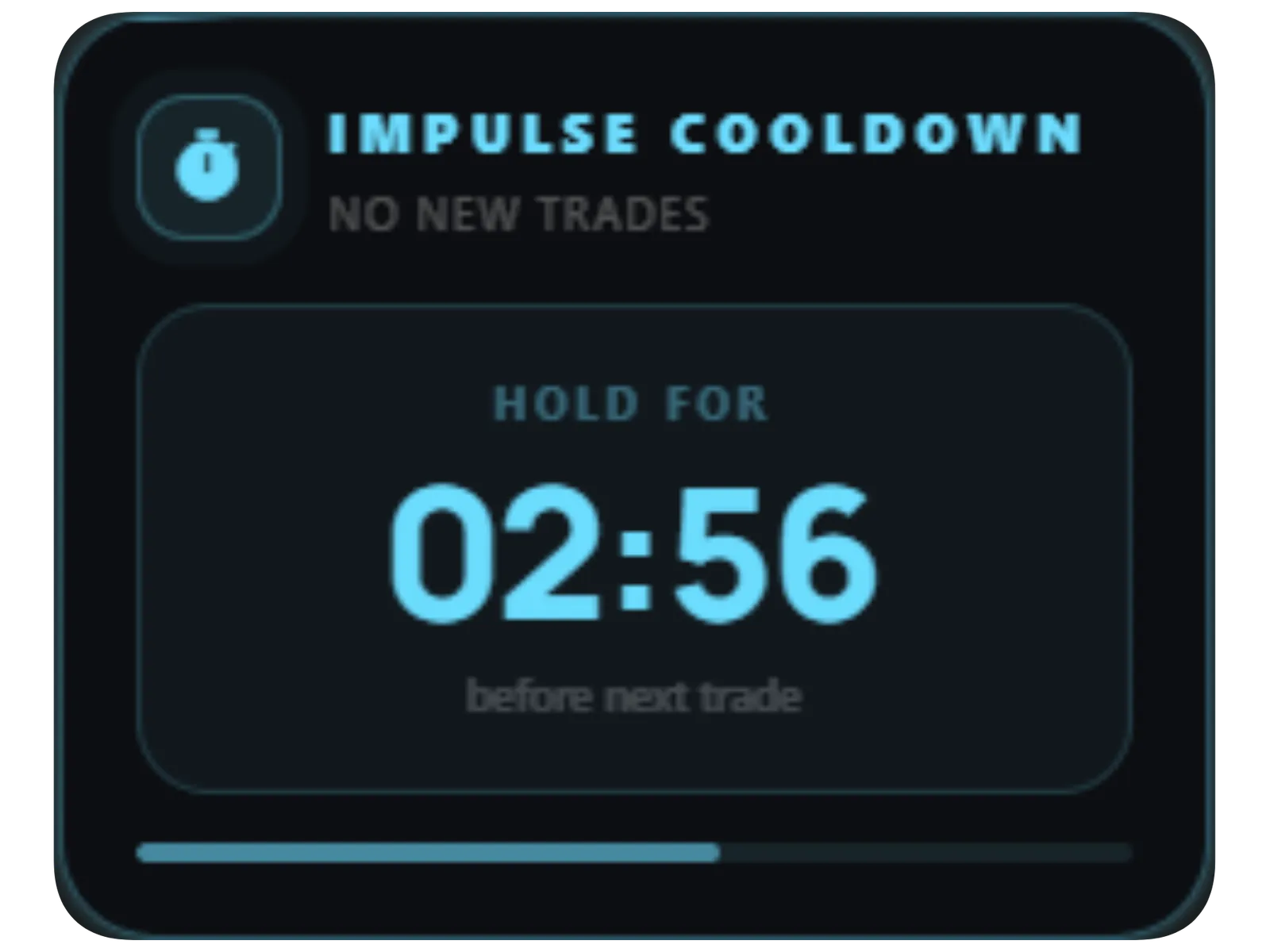
Revenge trading means jumping back into the market straight after a loss to win the money back, not because your setup appeared. LossGuardian spots it by timing. A new entry within a set time after an exit, 10 minutes by default, is flagged as an impulse trade and starts a cooldown. It catches the habit even when that trade wins.
Why loss-based rules miss revenge trading
Most risk tools only look at how much you lost. But a revenge trade does not always lose. Sometimes it wins.
That is the dangerous version. You get stopped out, jump straight back in with a bigger size, and it works. Your brain files it under "good instinct". Next time it does not work, and the size is bigger again.
What revenge trades have in common is not the result. It is the timing. They come fast, often within a minute or two of an exit, before any real setup could form.
How revenge trading detection works in LossGuardian
- 1
You set the impulse window, 10 minutes by default.
- 2
LossGuardian watches every exit and every new entry from your broker’s order data.
- 3
A new position opened inside the window after an exit is flagged as an impulse trade and an alert fires.
- 4
The more serious cases start a cooldown timer, and every impulse trade is counted in your discipline score, win or lose.
Why timing works better than P&L
It catches the lucky ones
A revenge trade that wins is still a revenge trade. Flagging it stops the wrong lesson from sticking.
One alert at a time
Alerts are spaced out so you never get a pile of popups and sounds at once. One clear message beats five you learn to ignore.
Your pattern, in your data
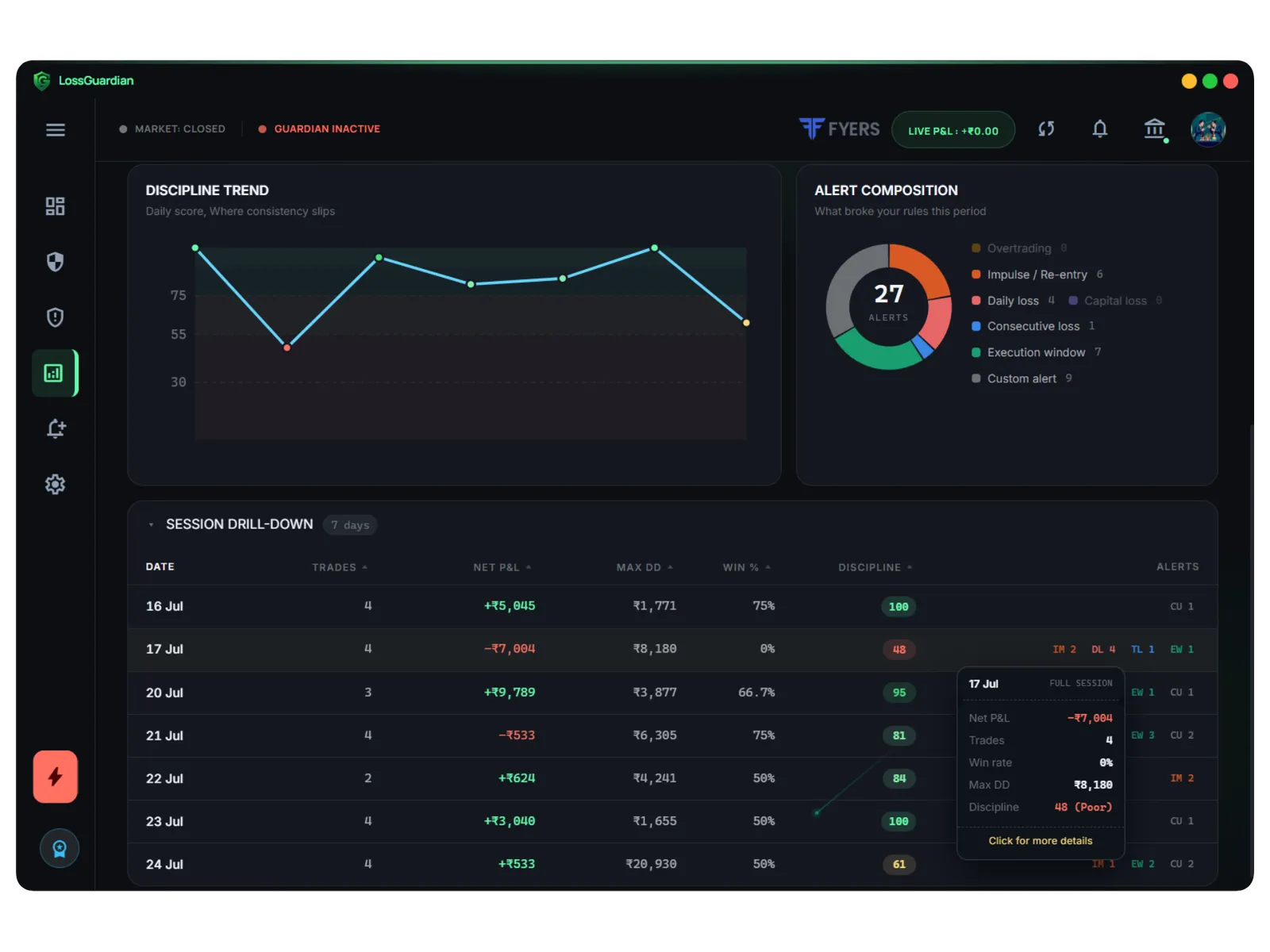
Impulse trades are saved per session. Over a month you can see which days, times and instruments set you off.
What it does not do
It does not reject your order. LossGuardian cannot touch your account. It makes the impulse visible in the moment and on the record, which is what helps you notice it next time before you click.
Revenge trading detection: questions traders ask
What is revenge trading?
Taking a trade to win back a loss you just took, instead of because your strategy called for it. It usually comes fast, bigger than normal, and in the same instrument as the loss.
How do I know if I am revenge trading?
Check the time between your losing exits and your next entries. If you often re-enter within a few minutes, with bigger size than usual, that is the pattern.
Why flag a revenge trade that made money?
Because the win teaches the wrong lesson. A lucky revenge trade makes the next one more likely and usually bigger. The habit is the risk, not one result.
Can I change the impulse window?
Yes. The default is 10 minutes. Scalpers who re-enter quickly on purpose can shorten it. Traders who revenge trade after longer gaps can lengthen it.
Read more
More LossGuardian features
See all features · Works with Zerodha, Fyers, Dhan, Upstox, Angel One and Groww